
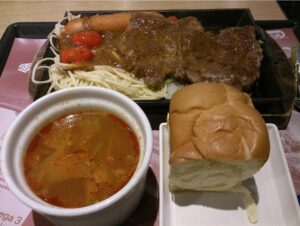
根據維基百科,最早的豉油西餐在19世紀末廣州太平館餐廳創立,20世紀30年代隨太平館移到香港,漸漸在50年代起大盛於當時興起的茶餐廳,港式西餐逐漸在平民百姓生活中普及起來,通常喜用豉油或中式調味料加入鐵板扒餐或意大利粉中,混合中西食材醬料的烹調法,為一種西方元素本地化的菜系。
好明顯,這種融合是非常有機的,首先有華洋雜處的生活環境,而華人平民餐廳廚房手邊方便有什麼食材香料,則就地取材,一方面適合舊有腸胃習慣的味道,而在用餐視覺形式上卻混搭出一種新鮮感,活潑地呈現不中不西,但又有中有西的港式西餐。
自少在港習中國舞、東南亞舞,80年代加入香港舞蹈團為第一代專業舞者,期間又受芭蕾舞、現代舞、中國戲曲、北京舞蹈學院體系的古典舞和民間舞訓練,1990年成為獨立舞者後又多次到美國學習接觸即興,後現代舞蹈技巧。
舉例作品《獨步》,一隻用油紙傘創作的獨舞,傘由油紙、竹及缐組成,全手動開關,是中國民間手工藝品,創作時用接觸即興技巧進入,尋找各種傘和身體的有趣構圖,以及聆聽傘產生的風,身體如何與它counter balance,如何ride on it,如何被它帶走或躲避,讓道具和身體對話,形成一隻具東方美韻的現代舞。
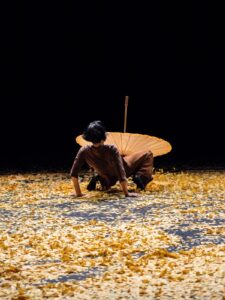
《獨步》
攝影:Kit Chan
圖片由香港藝術節提供
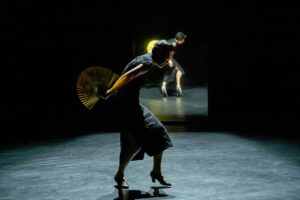
《遊園驚夢》
攝影:Kit Chan
圖片由香港藝術節提供
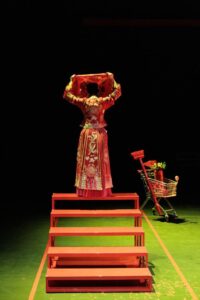
自由舞2023:
《囍—紅色的承諾》
攝影:Eric Hong
圖片由西九文化區管理局提供
回顧一下自己的創作,靈感取材皆圍繞生活中,從讀過的詩詞小說,欣賞的書畫,到日常生活用品、衣衫玩意等皆可入舞,著意挖掘其本質、趣味及詩意的聯想,手法、形式、語言面向世界,找出更合適的載體,與內在衝動有溝通的、有可能性的,能夠更好地刻劃一種處境,表達出一種狀態,隨手拎來,打破舊有的習慣理解,由自身出發,有機地消化,兼容並蓄,帶出當下的體會觀點。試想如果從一切流派脫退下來,還原在食物就是水、食材、鹽,還原在舞蹈是身體、時間、空間。然而,我們還在看到不斷千變萬化的色彩、形式、質地……,創作的樂趣也許就是這種不同文化、不同時空的對話經驗,從而觸摸到核心、界線、出處及未知的可能。
梅卓燕為國際知名獨舞藝術家及香港舞蹈大使,編舞手法糅合當代及傳統元素,風格鮮明,以精益求精的態度屢獲殊榮,包括香港舞蹈聯盟頒發四屆香港舞蹈年奬(編舞)及2012年傑出成就獎,以表揚其對香港舞蹈的貢獻。亦於2021年獲頒第15屆(藝術發展局)香港藝術發展獎藝術家年獎(舞蹈)及第16屆傑出藝術貢獻獎。
According to Wikipedia, the earliest 豉油西餐 si6 jau4 sai1 caan1 originated at the Tai Ping Koon Restaurant in Guangzhou in the late 19th century. The cuisine moved to Hong Kong with the restaurant in the 1930s, then gradually gained popularity with the emergence of cha chaan tengs (literally meaning “tea restaurant”) in the 1950s. Hong Kong-style Western cuisine became widespread among the general public, typically incorporating soy sauce or Chinese seasonings into hot-plate dishes and pasta, creating a cooking method that blends Chinese and Western ingredients and sauces. This way of cooking represents a localised cuisine with Western elements.
This fusion is clearly organic. First, there was a mixed living environment of Chinese and Western influences. Then, Chinese restaurants utilised whatever ingredients and spices were readily available. This local sourcing catered to the traditional tastes while also offering a fresh visual experience. The result is a vibrant Hong Kong-style Western cuisine that is neither fully Western nor fully Chinese but rather a harmonious blend of both.
From a young age, I studied Chinese dance and Southeast Asian dance in Hong Kong. In the 1980s, I joined the Hong Kong Dance Company as one of the first-generation professional dancers. During this time, I learnt ballet, modern dance and Chinese opera, along with Chinese classical and folk dance training from the Beijing Dance Academy system. After becoming an independent dancer in 1990, I travelled to the United States multiple times to study improvisation and postmodern dance techniques.
My work “Eulogy” is a solo dance created with an oil-paper umbrella. The umbrella is a traditional Chinese handicraft made of oil paper, bamboo and thread, featuring a fully manual opening mechanism. During the creative process, I employed contact improvisation techniques to explore various intriguing compositions between the umbrella and my body while listening to the sounds it produced. I examined how my body could counterbalance the umbrella, ride on it, be carried away by it and evade it. This interaction allowed my body to converse with the prop, resulting in a modern dance with an Eastern aesthetic.
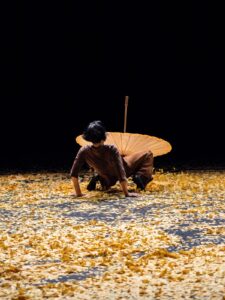
“Eulogy”
Photo by Kit Chan
Courtesy of Hong Kong Arts Festival
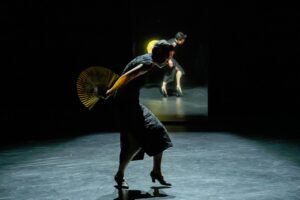
“Awakening in a Dream”
Photo by Kit Chan
Courtesy of Hong Kong Arts Festival
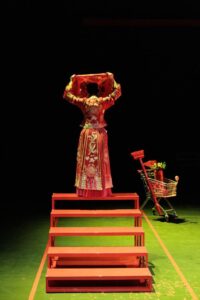
Freespace Dance 2023:
“Double Happiness:
The Promise of Red”
Photo by Eric Hong
©West Kowloon Cultural
District Authority
Reflecting on my own creative practice, my inspiration often comes from daily life—poetry and novels I've read, paintings and calligraphy I’ve appreciated, and everyday items, clothing and playthings. I intentionally excavate their essence, delightful nature and poetic association, searching for techniques, forms and languages to present them to the world. I seek the most suitable mediums that resonate with my inner impulses and possess the potential to effectively depict a situation and express a state of being. I draw from various accessible sources, breaking away from old habits and established understandings. Starting from my own experiences, I organically digest and integrate these elements to bring forth my current insights and perspectives.
Imagine if we stripped everything down to its fundamentals, reverting food to water, ingredients and salt and dance to body, time and space. Yet, we can still perceive an ever-changing array of colours, forms and textures. The joy of creation may lie in this dialogue among different cultures and temporalities, allowing us to access the core, boundaries, origins and unknown possibilities.
Mui Cheuk-yin is an internationally renowned solo artist and dance ambassador for Hong Kong. Her choreography has a distinctive voice, often blending contemporary and traditional elements. Mui’s commitment and passion for excellence in dance have earned her multiple Dance Awards in 2000, 2001, 2009 and 2022 as well as the Distinguished Achievement Award 2012 from the Hong Kong Dance Alliance. Additionally, she was named Artist of the Year at the 15th Hong Kong Arts Development Awards and received the Award for Outstanding Contribution in Arts at the 16th Hong Kong Arts Development Awards for her dedication and long-standing commitment to developing dance in the city over three decades.